Showing posts with label Author's Journal. Show all posts
Author's Journal: Drafting Your Story
Exactly when you decide to venture a draft of your story no one can predict. Some people start at the end and work backwards. Others take the more traditional path and determine a beginning. It’s best to know your ending before you start. I knew my story was a ten year account of my character’s early career as an attorney. My story was about how such a young attorney became a congressman in such a short time. It took a while for me to see how he made his living and acquired wealth. Almost immediately after arriving in NM he became the territory’s most successful lawyer. He had an engaging personality, was better and more recently educated. He learned the Spanish language so quickly most people were amazed. His most important asset, aside from these, was his mentors, men whose advice he sought and followed judiciously. He made friends easily and helped others who cooperated with him, partnering with several on various projects.
I wrote many drafts of my story. I can only laugh at the early attempts now. I had very little to follow since most stories of the West of this period are of the Indian wars and personal accounts of “gunslingers” and outlaws.
The greatest difficulty I had in writing my book was in merging all of the information I’d gathered. I finally hung chronologies of my central character’s personal life, the progress of the Maxwell Grant, progress of the Sangre de Cristo, the major political events of the Republican Party, the advance of the Maxwell Grant’s survey, the conflict between my character and each of his adversaries (Chaves’ surrogates), and a chain of events related to NM’s land grants on the wall. I then used cards to form a storyboard of scenes. Through these I established a draft that provided a reasonable continuum until I could begin to reduce the mass to the pattern of fiction. You may start with an outline, most writers do. My goal was perhaps too ambitious and thereby too complex, but it represents what I wanted to know.
Author's Journal: Organizing Your Research
I recommend a three or four pronged attack on research organization. Yours may vary from mine somewhat because I save none of my research on the computer. You will need to keep many files: chronology files, character files, setting files, procedure files, cultural practices files, and many others. I have four filing drawers in two cabinets beside my desk. The rest of my files are in crates – four of them, in fact. Those eight file “drawers” represent one story. Two of those drawers are devoted to the operation of my computers and my printer, my professional contacts, and my writers’ organizations. I also keep some files on my submissions in these.
I also have two sets of book shelves and I use sticky notes to indicate pages containing important information – which I label. My books fall into two primary categories: books related to my story and those on technique.
Aside from all this, I have two large boxes which contain copies of old newspapers of my period and place. I use sticky notes on these as well since my story is a political and business story which progresses chronologically. I label these by topic and date and fasten them together in six month periods. They represent the 10 years of my story. They all come from microfilm I’ve had to copy. I can thank these papers for knowing the comings and goings of nearly all of the primary characters of my story.
Author's Journal: Online Resources
Microsoft Encarta Reference Library XP 2003 appears to have received a four star rating. Its current price is about $98. It is an online encyclopedia.
The Questia website is designed to help students write research papers. Its promotion page states that “it will help you create professor-approved citations and bibliographies.” You can save highlights, notes, and bookmarks. Its layout provides convenient project organization folders. It boasts six million books and articles, 70,000 full text online books, and 1700 reliable sources. The site offers a free tour and a free one-day trial. I didn’t investigate the pricing of its service.
Lastly, there is a way to use the resources of the Library of Congress online. I haven’t done this myself because I have made several trips to Washington to use the Library of Congress which requires you to get a pass. Naturally, books can’t be checked out there, so you must be prepared to copy your materials, which can be costly. The use of their online resources would be advisable. When all else fails, I would say they are the library of the last resort.
I should also add that the New York Public Library can help you find the source for almost any missing fact or event. Their phone number is: 912-275-6975.
The next two posts on this topic deal with organization of your sources, an extremely important part of your research. As your topic broadens you will have to arrange your work so that you can find materials which fit the circumstances of your plot and characters, your setting, the events peculiar to your time period, and the issues involved. Different time periods will demand a variety of source material.
Author's Journal: Plotting Your Story
Some of the earliest historical novels were built around accounts of wars. These were delivered in a chronological order. You may want to test the plotting of your story first by outlining major events in a chronological form. If conflict is involved, you’ll probably find it’s worthwhile to outline the events of two conflicting characters separately. Each person has separate objectives and suspense builds if the reader sees and anticipates the clash of two characters. That’s when you’ll begin to see the need for several outlines built around a single chronology. When these are woven together, you get the warp and woof of your story. You have successfully “layered” your story. These chronologies employ much of your research. You must be organized, for you’ll likely rewrite these chronologies many times.
A book develops, over time, a complex and more nuanced account of your characters and their responses to various challenges. This is also an important moment to look for the scene which represents the outcome of your story. Does the main character face a moral dilemma? Is it serious enough to worry the reader – and will the finish be happy or sad? Is the story a battle between two individuals, “man against man”, or man against nature, or some other conflict? How will your resources contribute and how will your drafts progress and reflect the work of careful organization?
Author's Journal: Websites As A Research Resource
I mention websites last in my list of resources because they are the most unreliable. Some sites are genuine to the same degree some books are reliable. Once you’ve gathered all the other information possible, it’s much easier to discern what you can trust. Otherwise, I’d suggest that you find one or two other sources which confirm the information to be found at that site. Where did the information come from? Was it found in letters which are established facts from records of an Army fort or an institution of some note? Did someone in authority by-pass regulations or established practice? I found this to be the case in one vital piece of evidence in my story. My character had to ask for a closed hearing to settle a matter when a general gave a private posse authorization to use federal arms against citizens who purchased stolen property. Such instances are rare, often hidden, but ultimately accessible if you are diligent in research.
More often than not, you will find that myth violates and taints facts in website research. Exaggeration and bluff were so much a part of the era I studied that I could scarcely separate truth and fantasy. Another well-known writer of my same era wrote a nonfiction account which passed as fact and misleads the reader by a long shot on his character. That character has been treated heroically for over a century and was actually a very simple and flawed individual. People often believe what they want because they need heroes. The frontier era in America is its heroic past. It is when a simple man, uneducated, somewhat frail, could go into a wilderness alone and make friends with savages and survive. This is the hero today’s average man and woman idealizes.
Author's Journal: Resources Diaries and Personal Correspondence
Diaries can be the most important resource tool of the historical fiction writer. These personal accounts of the period you are writing about will make the era come alive to you. I urge you to seek them out as diligently as possible. They may turn up in the most unexpected places. I found one among a collection of accounts of frontier women’s experiences. I was browsing the books available on my general subject: New Mexico. These were for sale at my local book store and the collection was first printed in 1990, again in 1998. I didn’t find it until 2001. Its relevance to my book was crucial. It gave me my opening pages, the connection of my main character to his primary mentor, and several of his earliest experiences in New Mexico. That resource didn’t appear on the web until 2005.
When searching for personal accounts such as diaries and personal letters, you may try county records, local bookshops, yard sales, and auctions. Also, ask for such accounts through your state’s archives. Many families make such mementos available to university libraries and archives. Another extremely valuable account of my main character’s business partner came to me through NMSU’s archives. Evidence of my character’s annual retainer fee from a mining operation was confirmed in these papers.
Also, remember that if your character ever held office, especially one monitored by the federal government, there is a record of his/her papers you can trace and copy. This may be on microfilm, but it’s where I found the letters of my character to the Attorney General of the U. S. My character had been District Attorney for the 1st District of NM in the territorial period. I was unable to find almost any personal letter of my character, but at least I had his business letters over a three year period.
Author's Journal
Getting To Know Your Subject
You’ve studied books and microfilm on your main character and his/her environs. You are beginning to know your subject fairly well, probably well beyond the average student of your general subject. It’s time to introduce yourself to some specialists, mostly academics. You should get to know the librarians and professors in your subject area. What else do you need to know? Make a list of what other specialists might be able to offer you. If you’ve already contacted some of these people to request information, tell them you plan to visit and give the dates. Ask if they might be available to meet you.
If a trip to your story site is what you have in mind – and it’s definitely advisable – keep a notebook and take photos to record who you meet, what you see, and what you learn. When you return, send thank yous to the people who helped you.
When you get home, begin at once to plot and draw up characterizations – if you haven’t already done so. Write descriptions of the way things look now and how they would have looked to someone in the time period you’ve chosen. Differentiate between your characters how various scenes you’ve envisioned in your story would have appeared to each one.
Get clear in your mind what point of view you intend to use. Will you be speaking from the pov of the main character or from a variation on a 3rd person pov? Test this if possible in several scenes you envision and work on that angle for a while. If you’ve found a book that you think can serve in some way as a model, read it at least twice studying the pov and the method the author used to break up the chapters.
You’ve studied books and microfilm on your main character and his/her environs. You are beginning to know your subject fairly well, probably well beyond the average student of your general subject. It’s time to introduce yourself to some specialists, mostly academics. You should get to know the librarians and professors in your subject area. What else do you need to know? Make a list of what other specialists might be able to offer you. If you’ve already contacted some of these people to request information, tell them you plan to visit and give the dates. Ask if they might be available to meet you.
If a trip to your story site is what you have in mind – and it’s definitely advisable – keep a notebook and take photos to record who you meet, what you see, and what you learn. When you return, send thank yous to the people who helped you.
When you get home, begin at once to plot and draw up characterizations – if you haven’t already done so. Write descriptions of the way things look now and how they would have looked to someone in the time period you’ve chosen. Differentiate between your characters how various scenes you’ve envisioned in your story would have appeared to each one.
Get clear in your mind what point of view you intend to use. Will you be speaking from the pov of the main character or from a variation on a 3rd person pov? Test this if possible in several scenes you envision and work on that angle for a while. If you’ve found a book that you think can serve in some way as a model, read it at least twice studying the pov and the method the author used to break up the chapters.
Author's Journal
Narrative Non-Fiction: Research Resources
Nearly every state university publishes an historical review magazine. This was my first resource after the books I found on my subject. Once you’ve read five or six books on your subject you should have begun to see many of the topics you’ll need to explore. Naturally, you’ll keep a notebook of these topics. Many of you will know how to store files of these topics on the computer. I’m sure I don’t have to tell you how important organization is to the creation of a saleable book.
The first level of research in the historical library is among such books as the Encyclopedia of American Biography and Who’s Who in American Biography, etc. Your librarian can guide you through such resources. Next, there are drawers of cards which lead you to the microfilm stacks. My main character was not a top tier politician and entrepreneur, but the microfilm found his name and profile in at least 30 books of important people. A Secretary of War for two years rates a fairly high status. Copy your microfilm sources and seek them out. Most of the men prior to the 19th century wrote their own short bios which were used in these encyclopedias of historical figures. Microfilm readers and printers are available in these libraries. Printing copies can be expensive. If you can establish trust, you may be able to take the microfilm reels to a local county library and copy them there for less than half the expense. That’s what I did to copy old newspapers.
You are now ready to explore your topic or main character or model for your main character on both a national and state level.
The first level of research in the historical library is among such books as the Encyclopedia of American Biography and Who’s Who in American Biography, etc. Your librarian can guide you through such resources. Next, there are drawers of cards which lead you to the microfilm stacks. My main character was not a top tier politician and entrepreneur, but the microfilm found his name and profile in at least 30 books of important people. A Secretary of War for two years rates a fairly high status. Copy your microfilm sources and seek them out. Most of the men prior to the 19th century wrote their own short bios which were used in these encyclopedias of historical figures. Microfilm readers and printers are available in these libraries. Printing copies can be expensive. If you can establish trust, you may be able to take the microfilm reels to a local county library and copy them there for less than half the expense. That’s what I did to copy old newspapers.
You are now ready to explore your topic or main character or model for your main character on both a national and state level.
Author's Journal ...
Narrative Non-Fiction
A book devoted to an historical subject must be authentic, otherwise it won’t get published. If you publish it yourself, it won’t be read by many people. In order to be authentic, you must employ facts. When it’s historical fiction you don’t have to cite facts, but you must incorporate them subtly into your story. Fiction emphasizes character and your central character is usually “created” to carry out some theme of the story. His or her moral dilemma is the basis of the story. Narrative nonfiction has to cite facts and is a bit trickier medium. An excellent example of narrative nonfiction is The Greater Journey by David McCullough. It takes up a number of American people’s stories which occur in the eighteen thirties and forties in Paris. Notable Americans went to Paris to be educated in the arts and in advanced medicine.
I can only advise writers to approach research in the manner I did. You will be able to understand research in American history. I began with my state’s historical library which is frequented by many people who choose to research their own family’s roots in the state where they live. A state’s history library will have an interlibrary loan department which shares documents with other state history libraries throughout the U. S. When you need a certain book, microfilm, or document it can be ordered through this department.
A book devoted to an historical subject must be authentic, otherwise it won’t get published. If you publish it yourself, it won’t be read by many people. In order to be authentic, you must employ facts. When it’s historical fiction you don’t have to cite facts, but you must incorporate them subtly into your story. Fiction emphasizes character and your central character is usually “created” to carry out some theme of the story. His or her moral dilemma is the basis of the story. Narrative nonfiction has to cite facts and is a bit trickier medium. An excellent example of narrative nonfiction is The Greater Journey by David McCullough. It takes up a number of American people’s stories which occur in the eighteen thirties and forties in Paris. Notable Americans went to Paris to be educated in the arts and in advanced medicine.I can only advise writers to approach research in the manner I did. You will be able to understand research in American history. I began with my state’s historical library which is frequented by many people who choose to research their own family’s roots in the state where they live. A state’s history library will have an interlibrary loan department which shares documents with other state history libraries throughout the U. S. When you need a certain book, microfilm, or document it can be ordered through this department.
Author's Journal ...
My Love of Historical Fiction
Most of the readers of YANKEE GOLD likely enjoy historical fiction. I’ll begin this discussion by telling you something about my experience with that genre. I’m not sure whether I began to love the genre through a book I read or whether the subject of Stephen Elkins caused me to read historical fiction.Somewhere between the ages of 8 and 10 my father and I walked a street below the campus of Davis & Elkins College and my father pointed to the two lovely homes on the hill above. He told me that Stephen Elkins had a young career in the west, in New Mexico. He became a politician there and was elected Congressman. My dad didn’t know why Elkins had stayed in the east and married a woman whose father was a West Virginia senator. I told Dad that since no one in our new little town of Elkins knew anything about Elkins’ early career, I sensed a scandal. I wasn’t wrong.
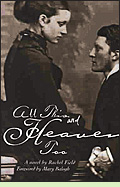
As a child I read a great deal. I was an only child and we had no relatives in West Virginia where we moved from Pittsburgh when I was eight. I read the usual fare for my era: Heidi, the Nancy Drew series, and Little Women. Somehow, I was introduced to All This and Heaven Too by Rachel Field. I was spellbound and hell bent on getting more. That’s how my reading and writing career began. I loved the era of Rachel Field’s ancestors and the stories surrounding the laying of America’s transatlantic cable. Her writing set off my fascination with American history
Subscribe to:
Posts (Atom)